

A bill of lading (BOL) is an important shipping document used in the transportation of goods. It provides information about the shipment, shipper, consignee, carrier, cargo, destination, and applicable shipping terms. A bill of lading template provides a structured format for preparing this document without creating the layout from scratch.
A bill of lading is commonly used in domestic and international transportation and can help the parties involved maintain a clear record of the goods being shipped. Depending on the type of shipment and applicable rules, it may also serve important contractual and evidentiary functions.
TemplatesDoc provides 11+ free bill of lading templates that can be used as a starting point for preparing shipping documentation.
What Is a Bill of Lading?
A bill of lading is a document associated with the shipment of goods from one location to another. It normally identifies the parties involved and provides details about the cargo and transportation.
Information commonly found on a BOL includes:
- Shipper information
- Consignee information
- Carrier information
- Origin and destination
- Description of goods
- Quantity of packages
- Weight
- Freight charges
- Shipment or reference number
- Special handling instructions
- Delivery information
- Signature or authorization
The exact fields depend on the carrier, type of shipment, and applicable requirements.
Free Bill of Lading Template
A free bill of lading template can save time for businesses that regularly prepare shipping documents. Instead of designing a new form for every shipment, you can use a standard format and enter the relevant cargo and transportation information.
The template can be customized with your company’s name, address, contact details, shipping information, and other fields required by your logistics process.
Bill of Lading Template in Word
A bill of lading Word template is useful when you need an editable document that can be customized before printing or saving as a PDF.
Microsoft Word allows you to modify headings, tables, company information, cargo descriptions, and other fields. Businesses can also create a standardized BOL format and reuse it for future shipments.
Bill of Lading Template in Excel
An Excel bill of lading template can be useful when shipment information needs to be organized in rows and columns. Excel can make it easier to manage quantities, weights, charges, and reference numbers.
For businesses handling frequent shipments, Excel can also be useful for maintaining a shipment log separately from individual bills of lading.
Types of Bill of Lading
Different types of bills of lading may be used depending on the shipment and contractual arrangement.
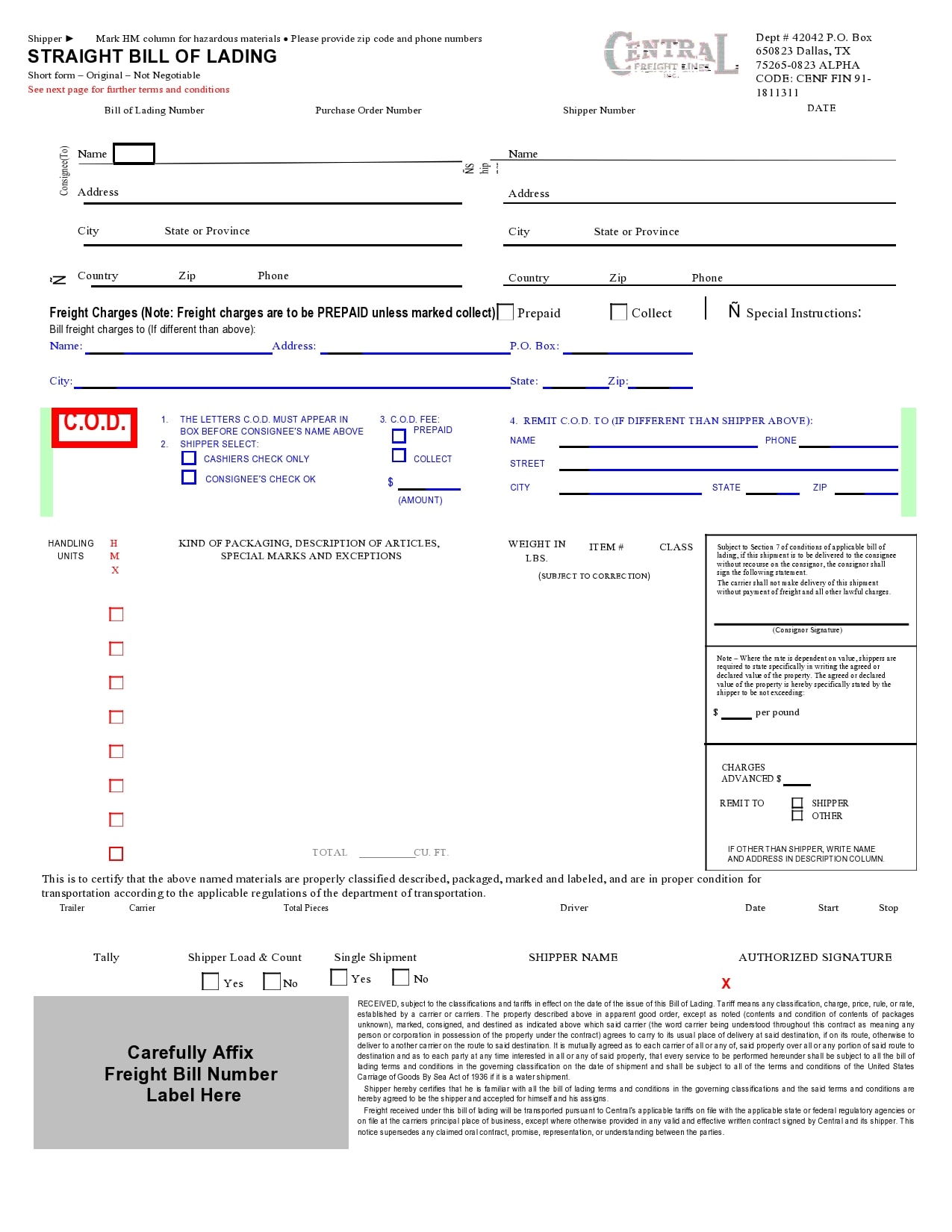
Straight bill of lading: Generally identifies a specific consignee and is commonly associated with non-negotiable shipments.
Order bill of lading: May allow transfer of rights to receive the goods through the applicable endorsement process.
Clean bill of lading: Indicates that the carrier has received the goods without noting apparent damage or discrepancies of the type covered by the document.
Claused or foul bill of lading: Contains a notation regarding the apparent condition or quantity of the goods.
The appropriate document depends on the transaction and transportation arrangement, so businesses should follow their carrier’s and applicable legal requirements.
What Should a Bill of Lading Include?
A BOL should contain enough information to identify the shipment and the parties responsible for sending, transporting, and receiving it.
Start with the shipper and consignee information, including names and addresses. Add the carrier details and shipment origin and destination.
The cargo section should accurately describe the goods and include the quantity, packaging type, weight, and other relevant information. Freight charges and reference numbers can also be included where applicable.
Accuracy is especially important because mistakes in addresses, quantities, weights, or cargo descriptions can create delays or disputes.
Bill of Lading vs. Commercial Invoice
A bill of lading and commercial invoice serve different purposes.
The bill of lading primarily documents the transportation of goods and provides shipment-related information.
A commercial invoice is generally used to document the commercial transaction between buyer and seller and is particularly important in international trade and customs processes.
Both documents may be required for an international shipment, but one does not replace the other.
Bill of Lading vs. Packing List
A packing list provides details about the contents of a shipment, such as packages, quantities, and descriptions.
A bill of lading is associated with the transportation contract and movement of the goods. The two documents can be used together to provide complementary shipping information.
How to Create a Bill of Lading
Creating a BOL from a template is straightforward:
- Enter shipper information.
- Add consignee details.
- Enter carrier information.
- Specify the origin and destination.
- Describe the goods accurately.
- Enter quantities, packaging, and weight.
- Add freight or reference information.
- Review all shipment details carefully.
- Print, save, or submit the document according to the carrier’s requirements.
Before using a generic template for an actual shipment, check whether your carrier, freight forwarder, or applicable regulations require a specific BOL format or additional information.
Download Free Bill of Lading Templates
Whether you need a bill of lading template, BOL template, bill of lading Word template, bill of lading Excel template, shipping document, freight bill of lading, or shipping form, a ready-made format can provide a useful starting point.
Customize the template with accurate shipment information and use it alongside other required documents such as invoices, packing lists, and customs paperwork when applicable.
A properly prepared bill of lading can help keep the shipper, carrier, and consignee aligned on the details of a shipment and provide an organized record of the goods being transported.
Downloadable Bill of Lading Templates And Formats
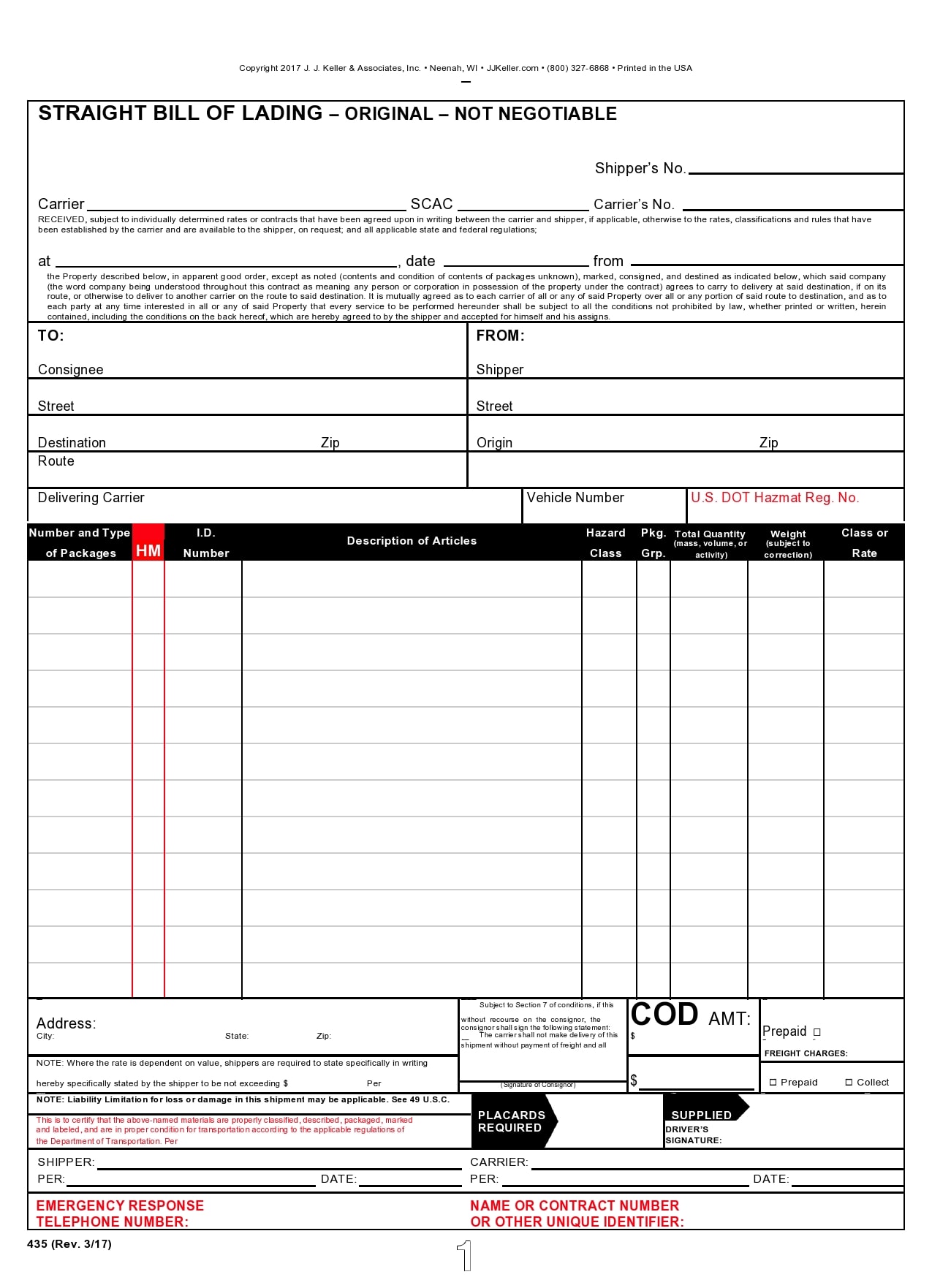
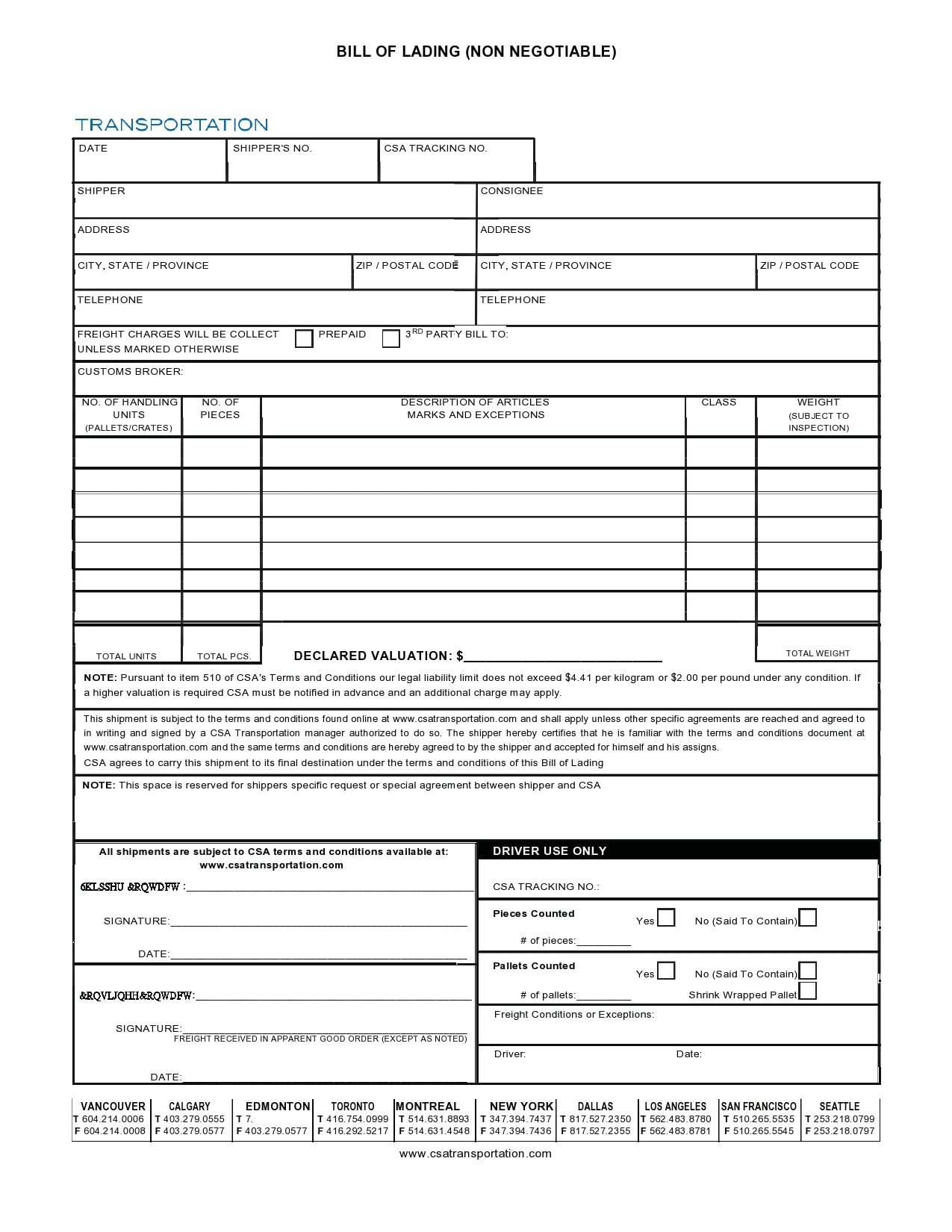
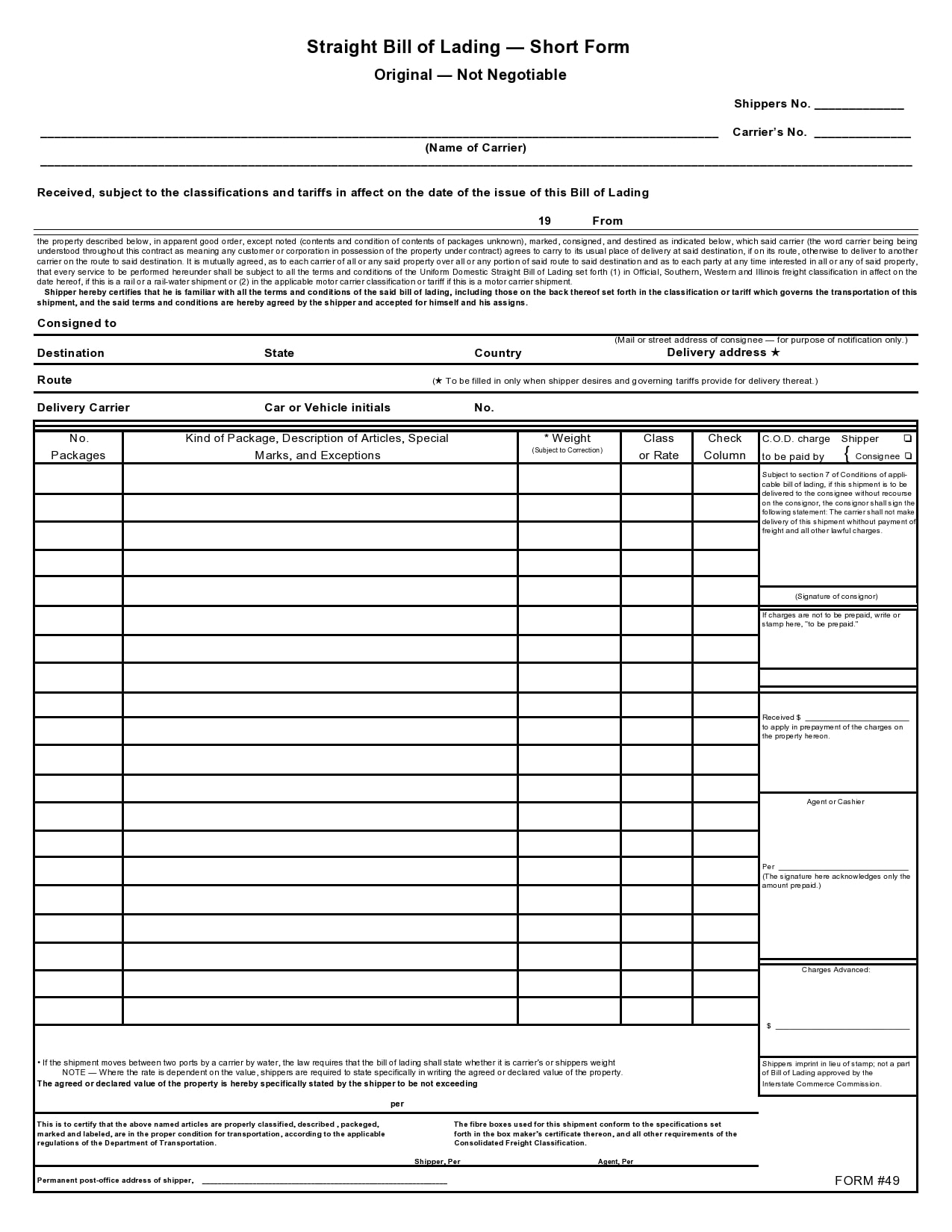
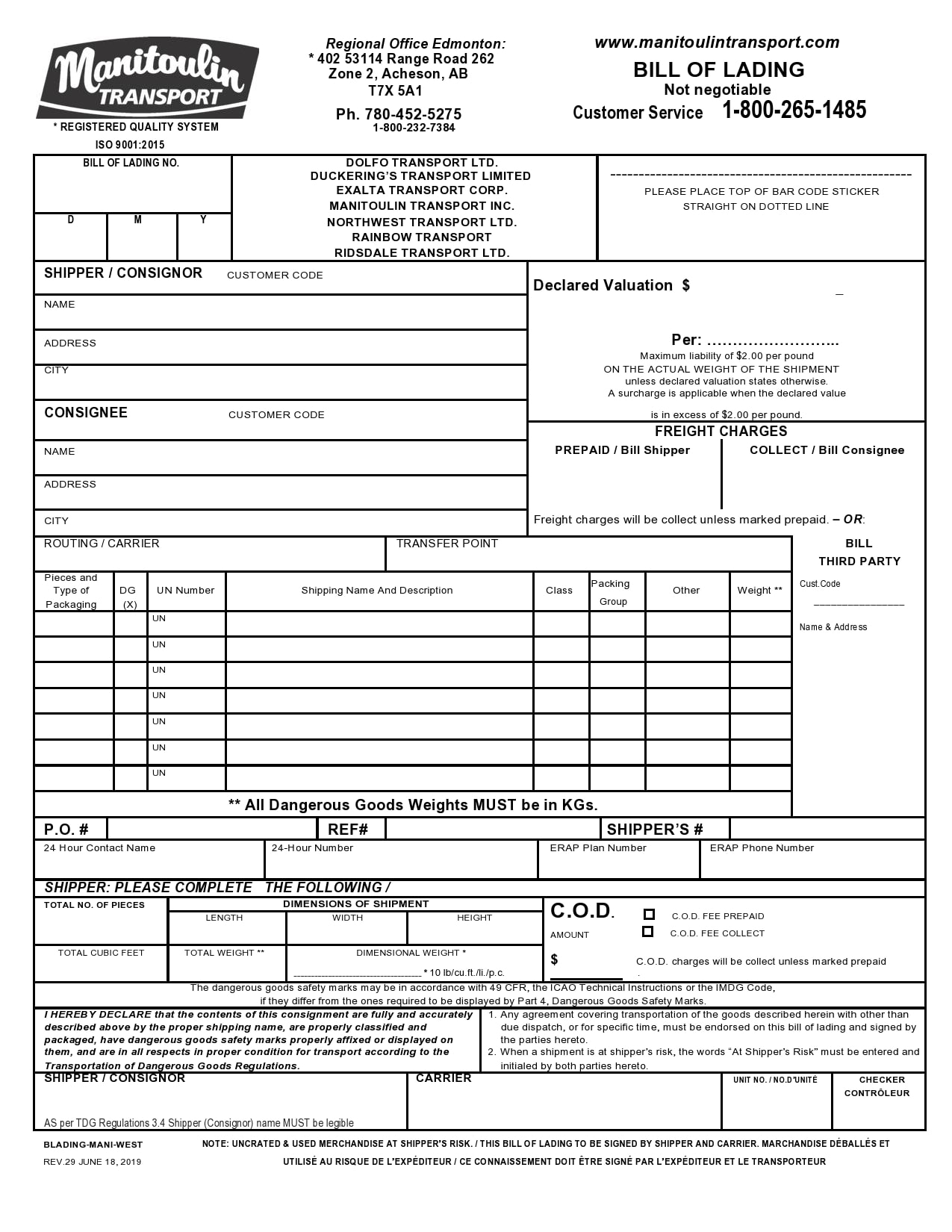
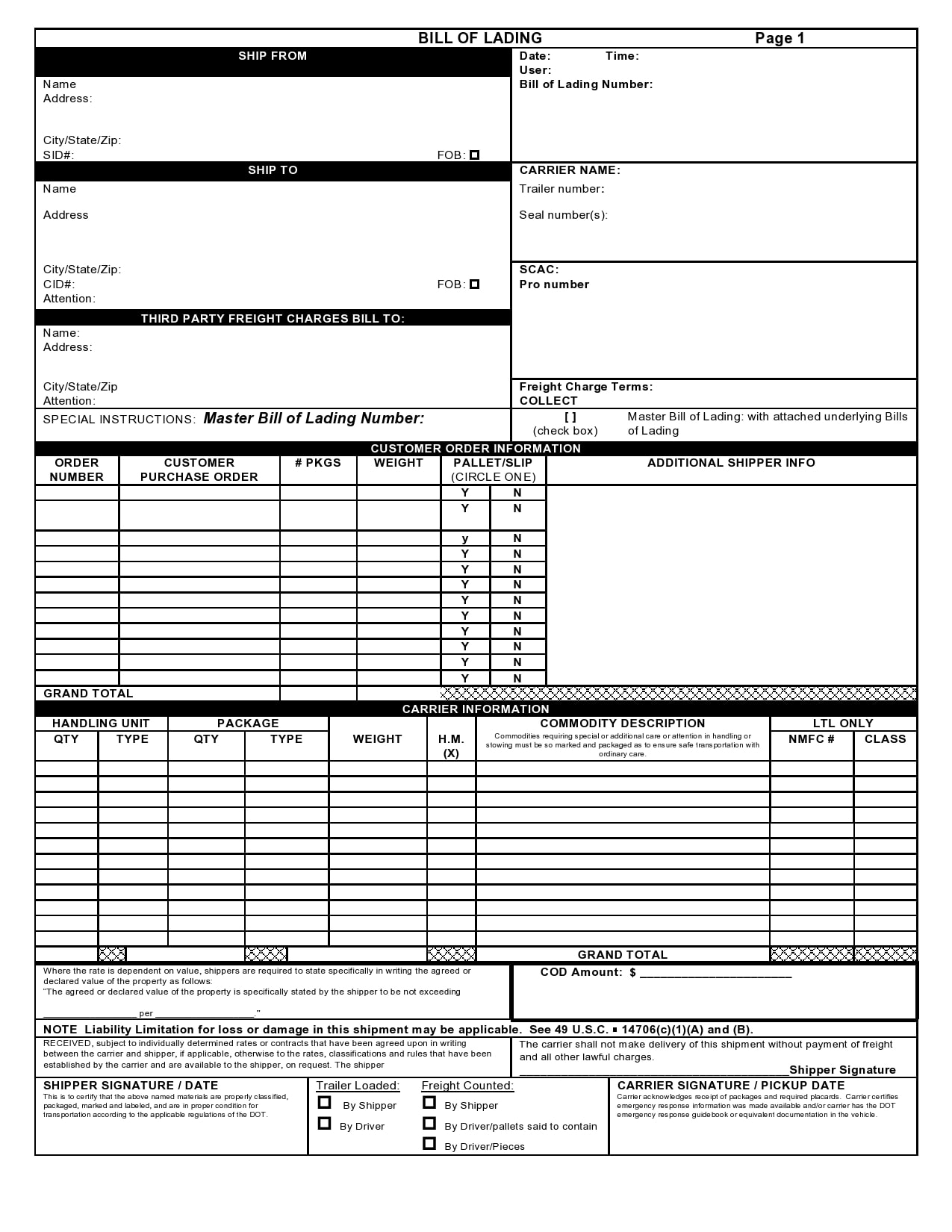
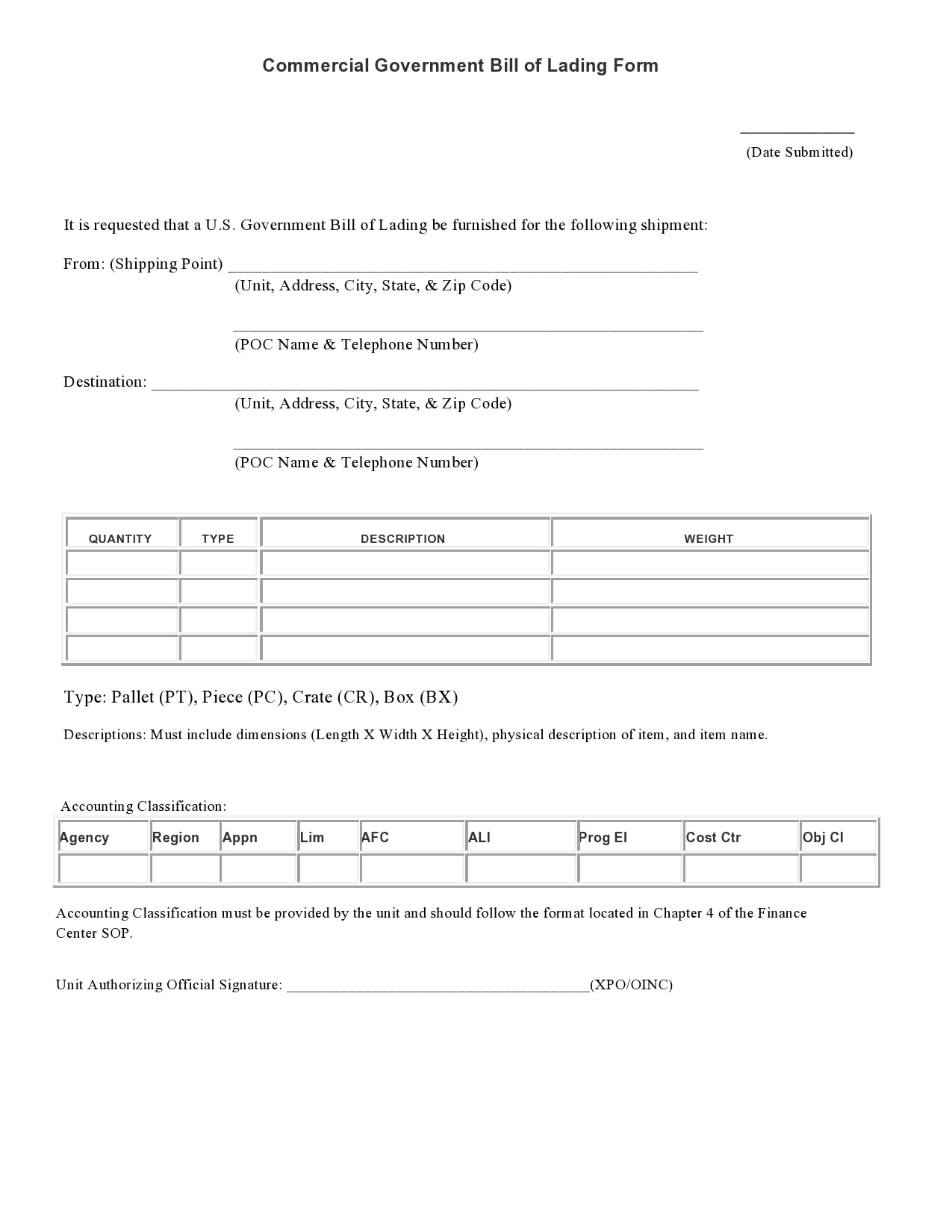
Bill of Lading Template
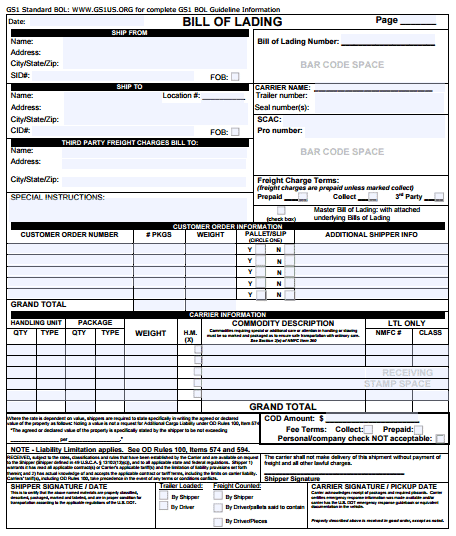
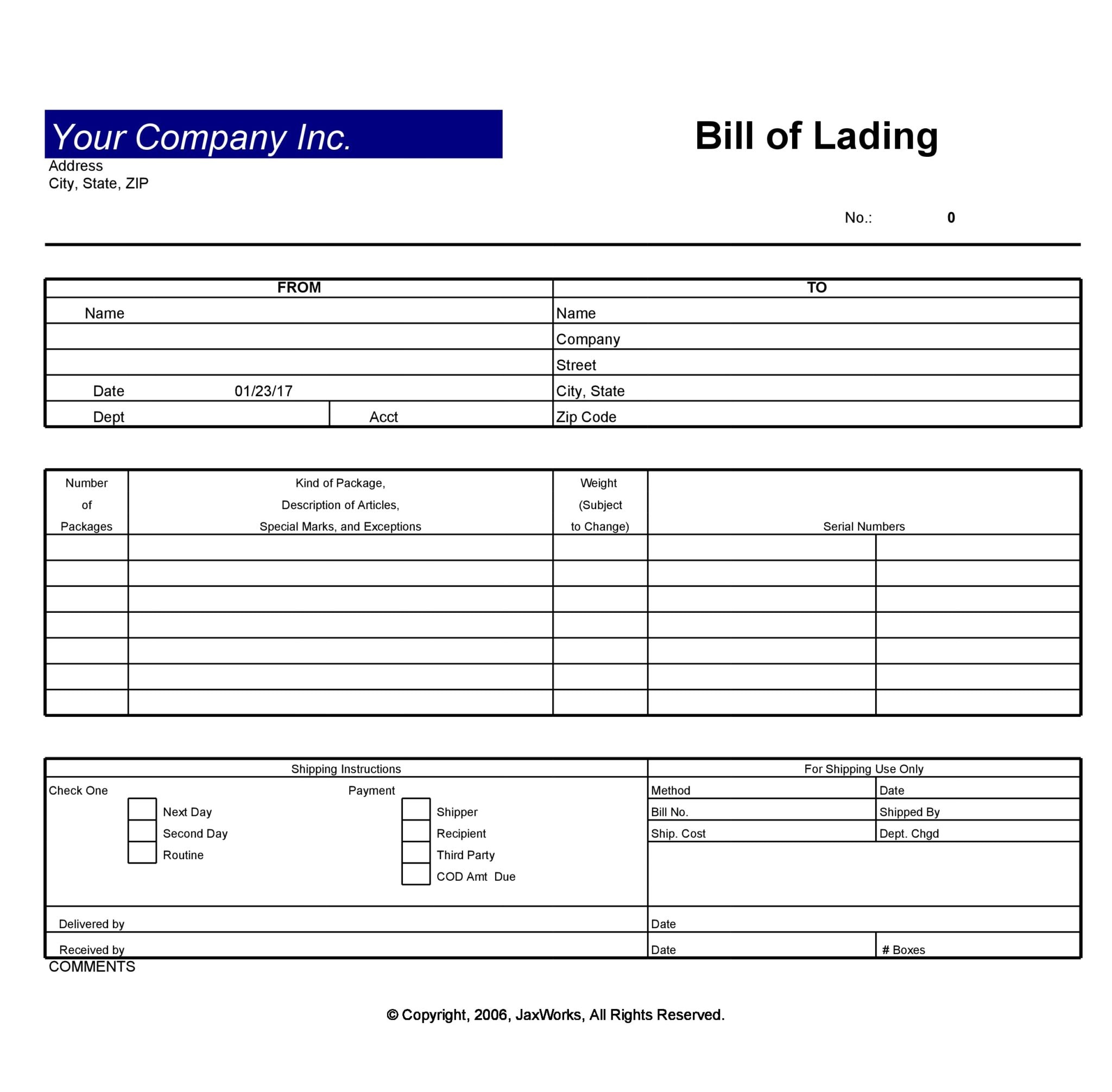
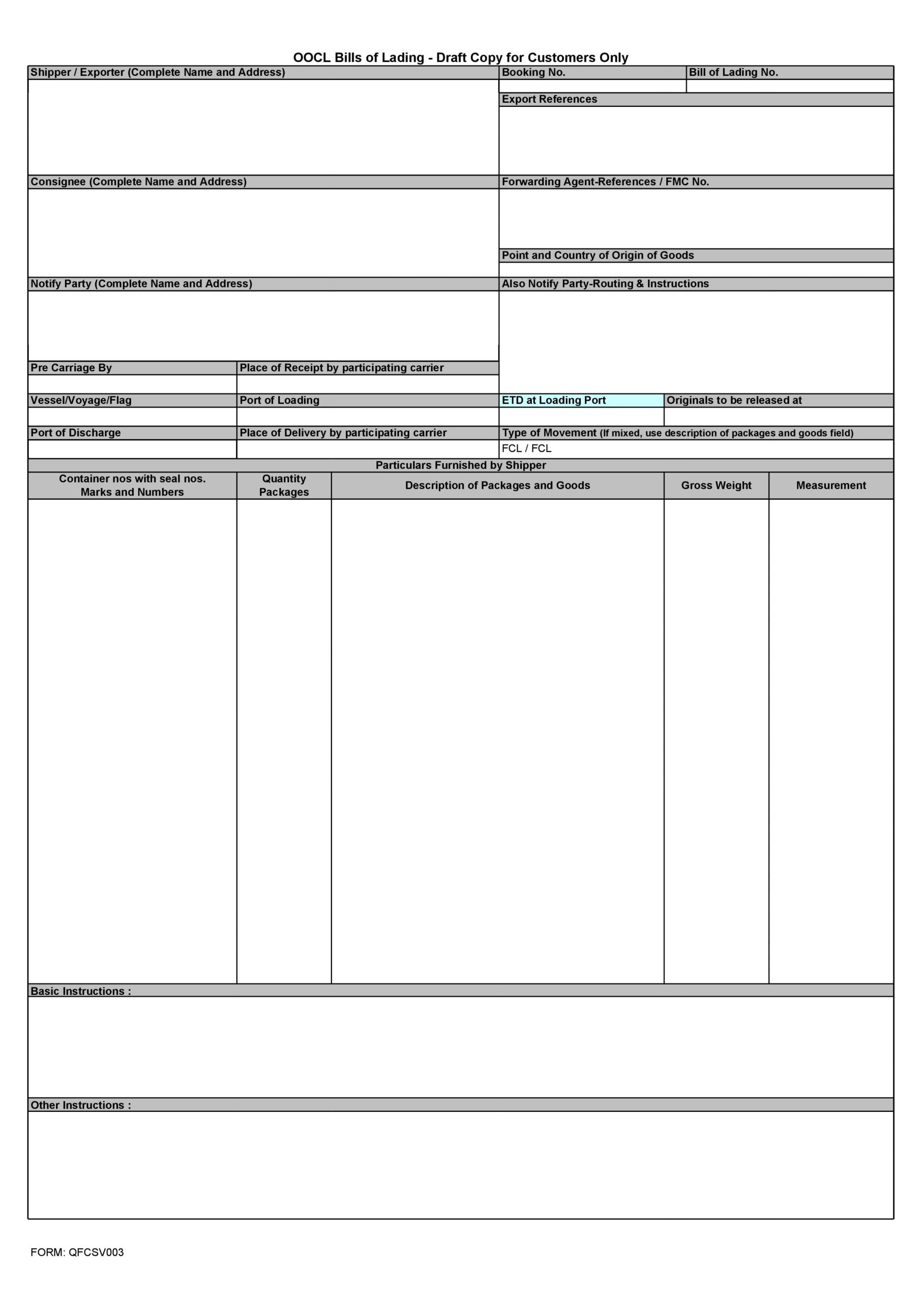
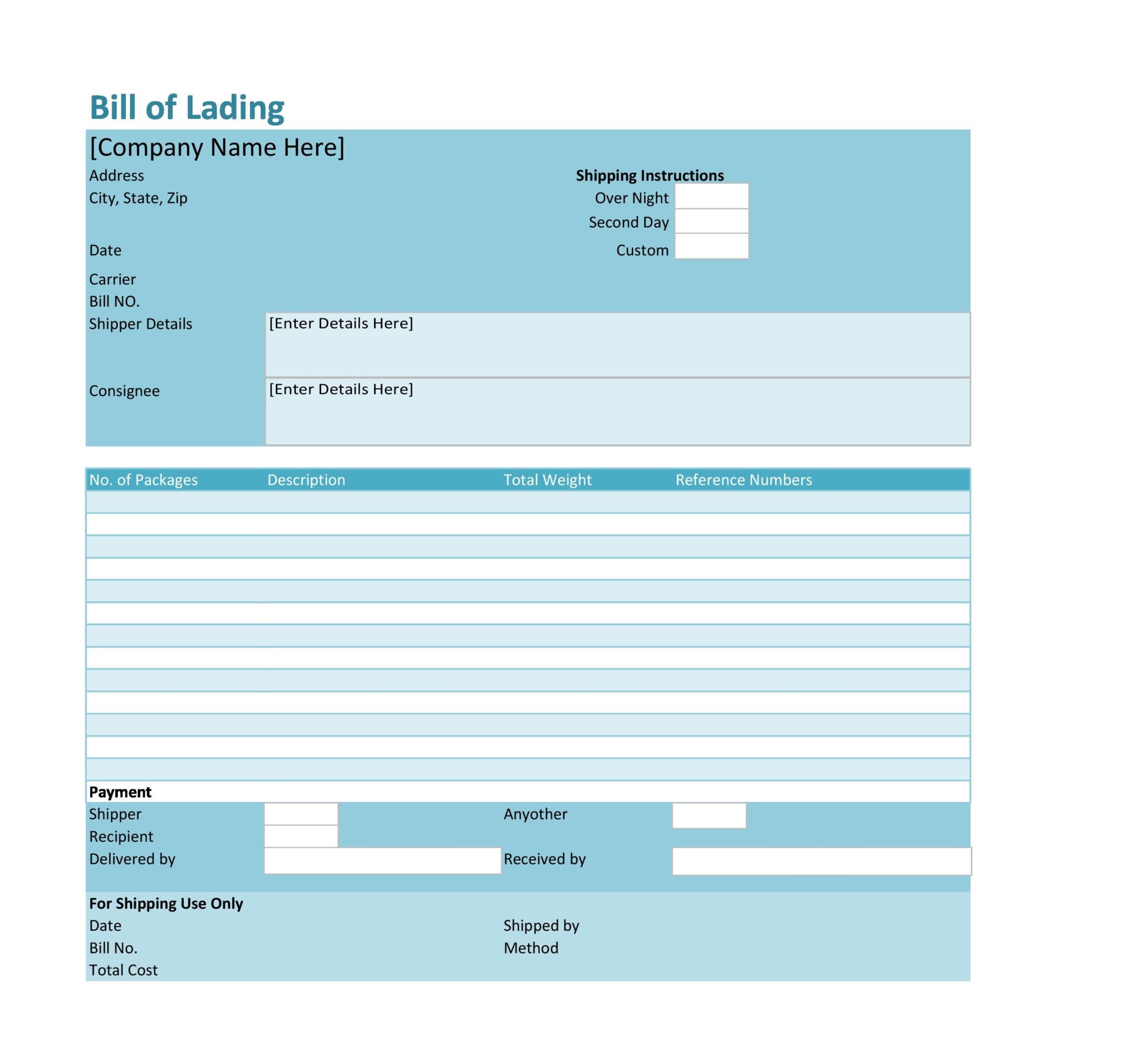
This bill of lading template provides a structured document format for recording information related to the shipment and transportation of goods. It can be customized with shipper and consignee details, carrier information, cargo descriptions, quantities, weights, destination, and other relevant shipping information.
The template can be useful for businesses involved in freight transportation, logistics, shipping, distribution, and commercial trade. Before using a generic template for an actual shipment, users should compare it with the requirements of their carrier or freight forwarder.

Frequently Asked Questions
1. What is a bill of lading?
A bill of lading is a shipping document that records important information about goods being transported, including the shipper, consignee, carrier, cargo, origin, destination, and transportation terms.
2. What is a BOL template?
A BOL template, or bill of lading template, is a ready-made document format used to prepare shipping information for the transportation of goods.
3. What information should a bill of lading contain?
A bill of lading commonly includes shipper and consignee details, carrier information, origin and destination, cargo description, quantity, weight, freight information, and relevant reference numbers.
4. Can I create a bill of lading in Word?
Yes. A bill of lading Word template can be edited with Microsoft Word and customized with your company and shipment information.
5. Can I create a bill of lading in Excel?
Yes. An Excel BOL template can be useful for organizing shipment details such as quantities, weights, cargo descriptions, and freight information.
6. What is the difference between a bill of lading and a packing list?
A packing list primarily describes the contents of a shipment. A bill of lading documents the transportation of goods and provides information about the parties and shipment.
7. Is a bill of lading the same as a commercial invoice?
No. A commercial invoice documents the commercial transaction between a buyer and seller, while a bill of lading is primarily associated with the transportation of goods.
8. Who prepares a bill of lading?
The BOL may be prepared by the shipper, carrier, freight forwarder, or another party involved in the shipment, depending on the transportation arrangement and carrier procedures.



You must be logged in to post a comment.