

A balance sheet is a financial statement that provides a snapshot of a business’s financial position at a specific point in time. It generally organizes financial information into three main categories: assets, liabilities, and owner’s equity or shareholders’ equity. Related templates: free income statement templates, free financial report template and free voucher templates.
A balance sheet template provides a ready-made structure for organizing these figures without building the financial statement from scratch. Businesses, companies, organizations, and sole proprietors can use an editable template to record financial information, calculate totals, and present a clearer overview of their financial position.
Balance Sheet Templates
A balance sheet follows the basic accounting relationship:
Assets = Liabilities + Equity
Assets represent what a business owns or controls, while liabilities represent amounts the business owes. Equity generally represents the owner’s or shareholders’ interest after liabilities are deducted from assets.
A well-organized balance sheet can make it easier to review financial position and compare figures between different reporting periods. The exact accounts included will depend on the type and size of the business.
Balance Sheet Template in Excel
A balance sheet template in Excel is particularly useful because spreadsheets can organize financial figures into rows and columns and perform calculations automatically. You can enter values for assets, liabilities, and equity and use formulas to calculate totals.
Excel also makes it easy to create separate columns for different reporting periods. This can help businesses compare current figures with previous months, quarters, or years and identify significant changes.
Balance Sheet Template in Word
A balance sheet template in Word can be useful when the primary goal is to present financial information in a simple document format. Word allows you to customize headings, tables, company information, reporting dates, and other details.
For calculations involving many accounts, however, Excel is generally more convenient because formulas can reduce manual calculation and help maintain consistent totals.
Assets on a Balance Sheet
Assets are resources owned or controlled by a business that have economic value. Common balance sheet assets include cash, accounts receivable, inventory, equipment, vehicles, property, and certain investments.
Assets are often divided into current assets and non-current assets. Current assets are generally expected to be converted into cash or used within a relatively short period, while non-current assets are held for longer-term business use.
Liabilities on a Balance Sheet
Liabilities represent financial obligations owed by the business to other parties. Examples can include accounts payable, loans, accrued expenses, taxes payable, and other debts.
Like assets, liabilities may be classified as current or non-current depending on when the obligation is expected to be settled. Proper classification helps readers understand the business’s short-term and long-term obligations.
Owner’s Equity
Owner’s equity represents the owner’s interest in a business after liabilities are considered. In a corporation, the corresponding section is generally referred to as shareholders’ equity.
Depending on the business structure, equity may include contributed capital, retained earnings, or other relevant accounts. The exact presentation can vary according to accounting practices and the organization’s circumstances.
Monthly and Annual Balance Sheet
A monthly balance sheet can help a business monitor changes in its financial position throughout the year. Comparing monthly statements can reveal changes in cash, receivables, inventory, debt, and equity.
An annual balance sheet provides a year-end snapshot that can be useful for financial reporting, planning, and comparison with previous years. Businesses should use consistent accounting methods when comparing periods.
How to Prepare a Balance Sheet
Start by selecting the reporting date and gathering the relevant financial information. List the business’s assets and liabilities and classify them appropriately.
Next, calculate the relevant equity figures and verify that the balance sheet follows the accounting equation. The total assets should equal the combined total of liabilities and equity. Investigate any difference rather than adjusting figures simply to make the statement balance.
For formal financial reporting, use the accounting policies and requirements applicable to your business and jurisdiction.
Balance Sheet for Small Business
A small business balance sheet can provide a useful overview of financial health. Even a relatively small business may have several accounts that need to be organized, including cash, receivables, inventory, equipment, loans, and owner equity.
A simple template can make routine financial record-keeping easier, but the accounts should be tailored to the business. Keep supporting accounting records so the figures reported on the balance sheet can be verified.
Download Free Balance Sheet Templates
These free balance sheet templates in Excel and Word provide ready-made formats for organizing assets, liabilities, and equity. They can be customized for small businesses, companies, organizations, and sole proprietors.
Choose a format that suits your accounting needs, enter accurate financial information, and review the formulas and totals before using the completed statement. A structured balance sheet can make financial information easier to understand, compare, and manage.
Downloadable Balance Sheet Templates And Formats
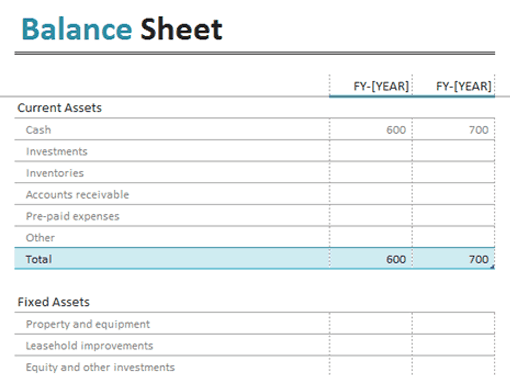

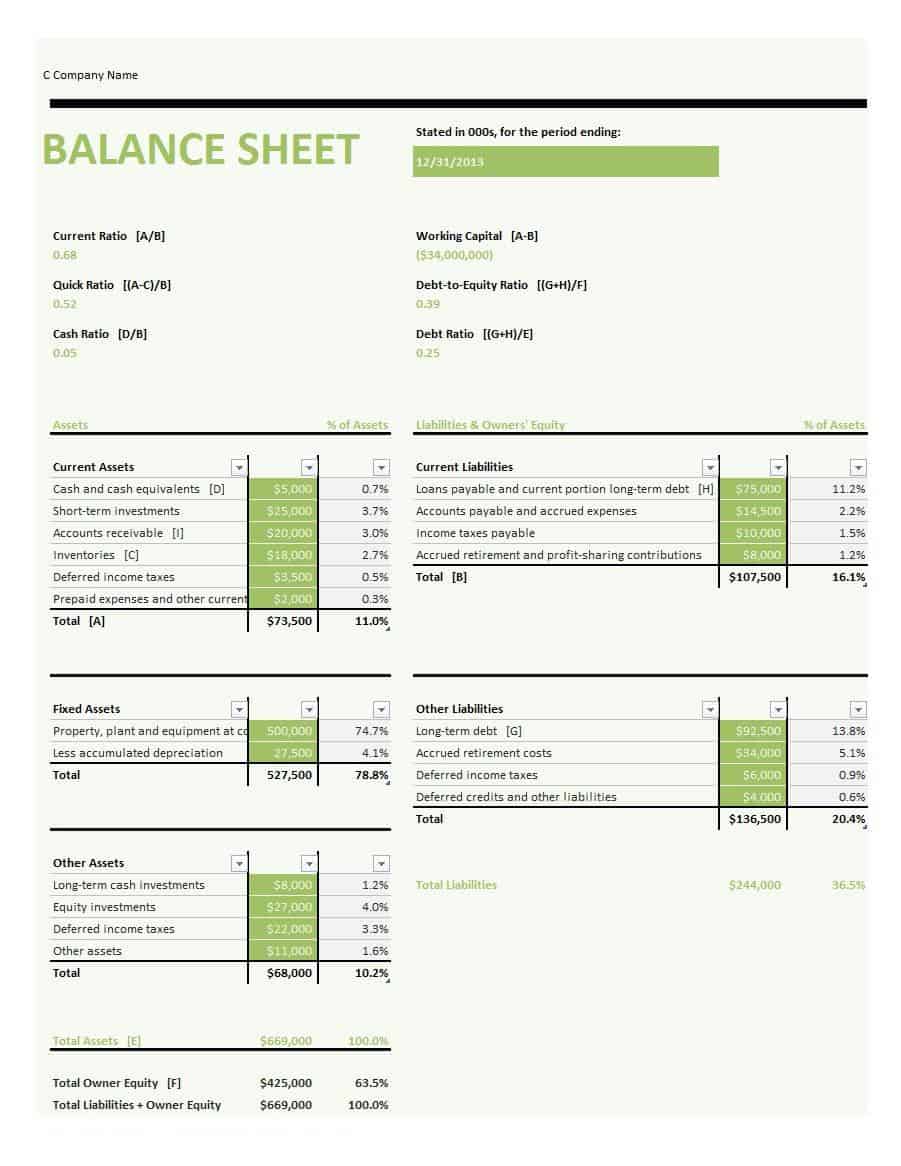
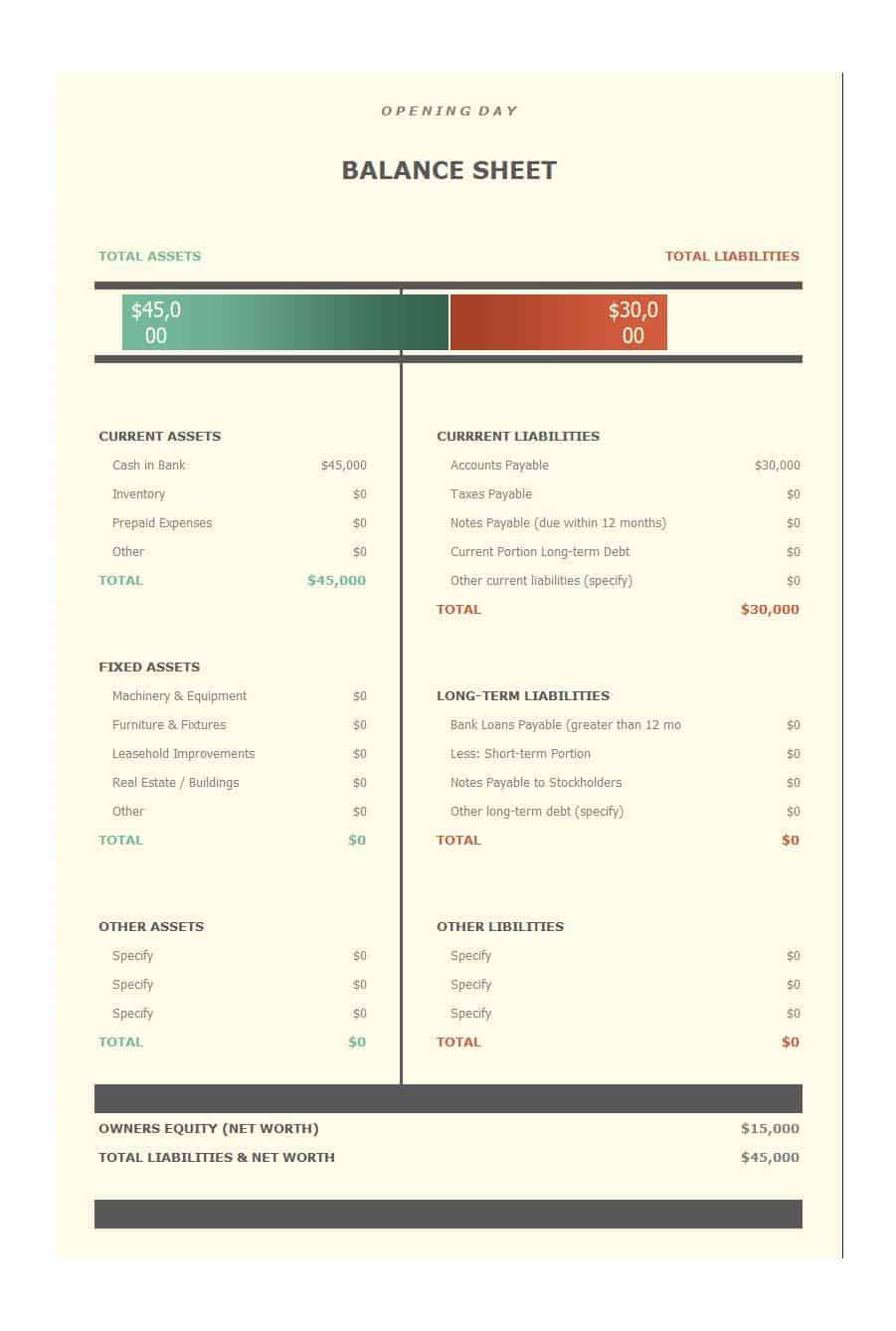
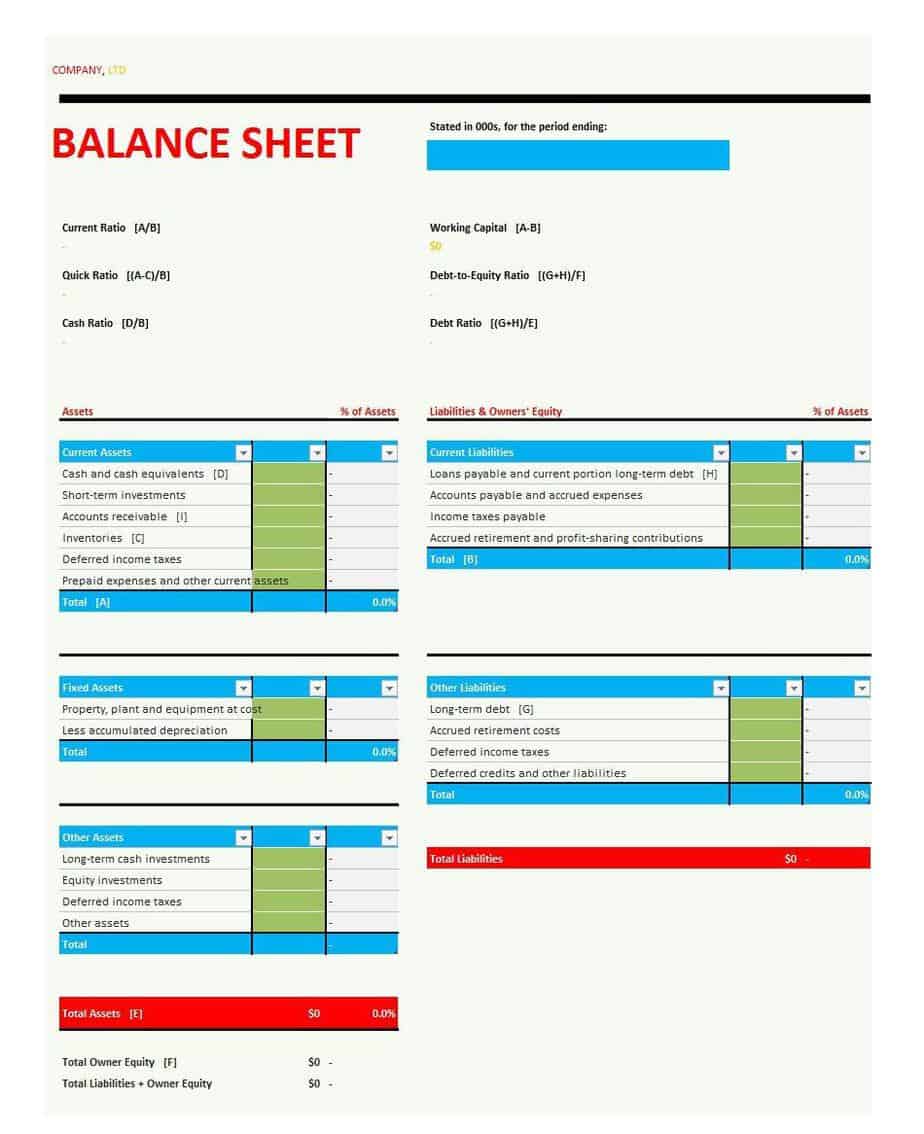
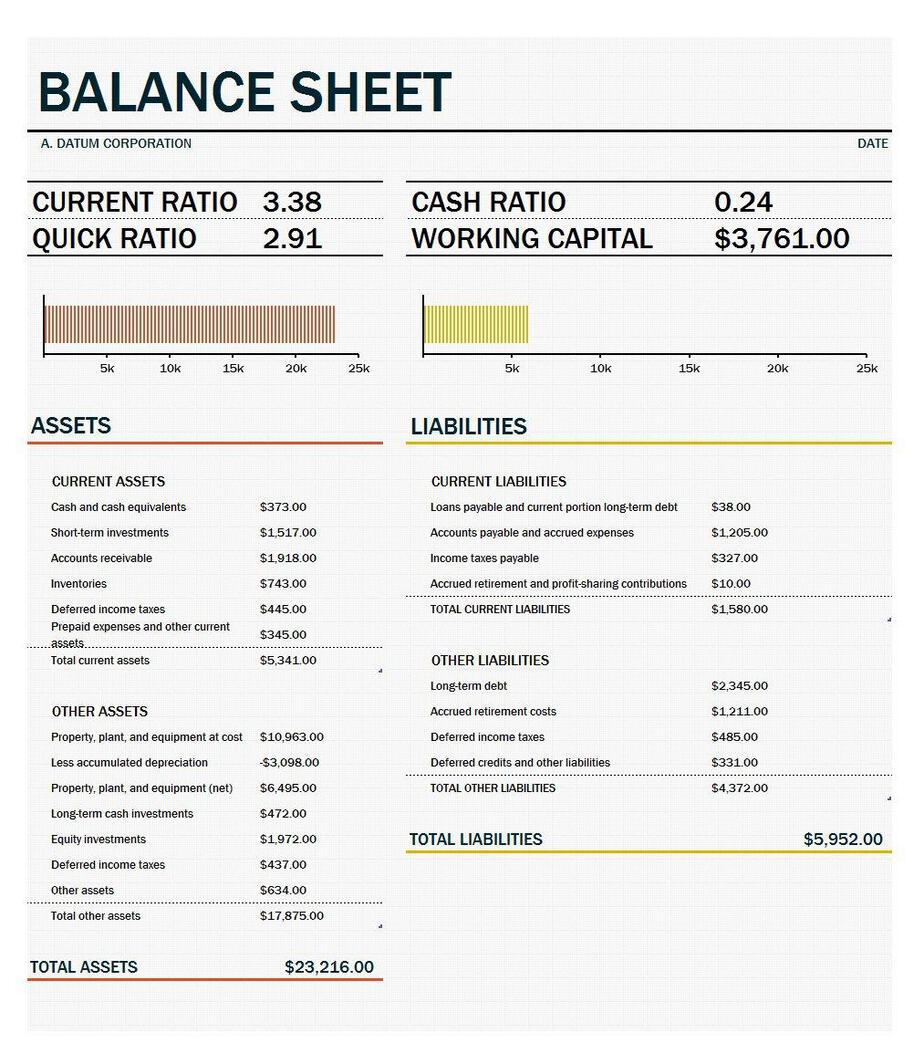
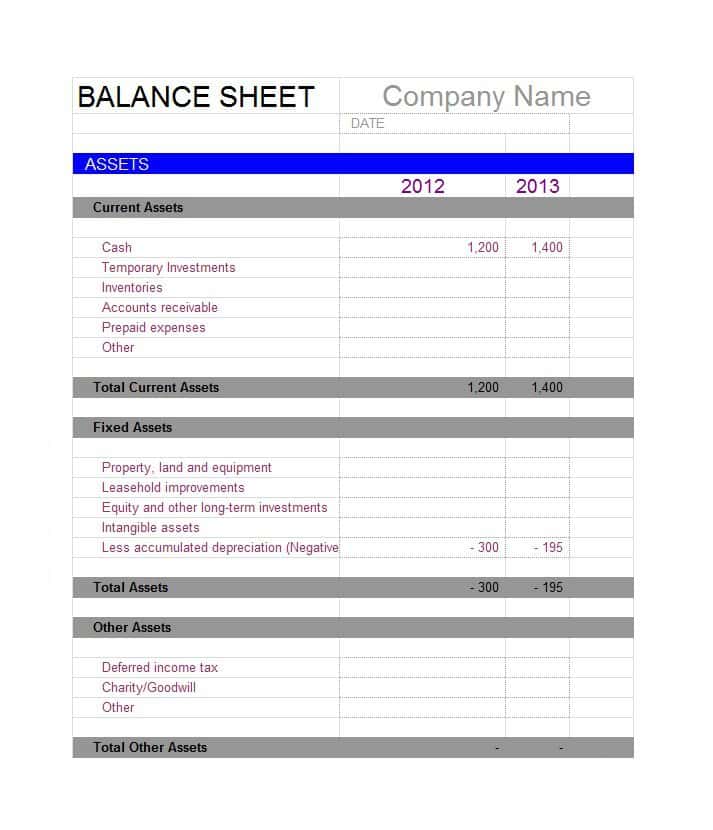
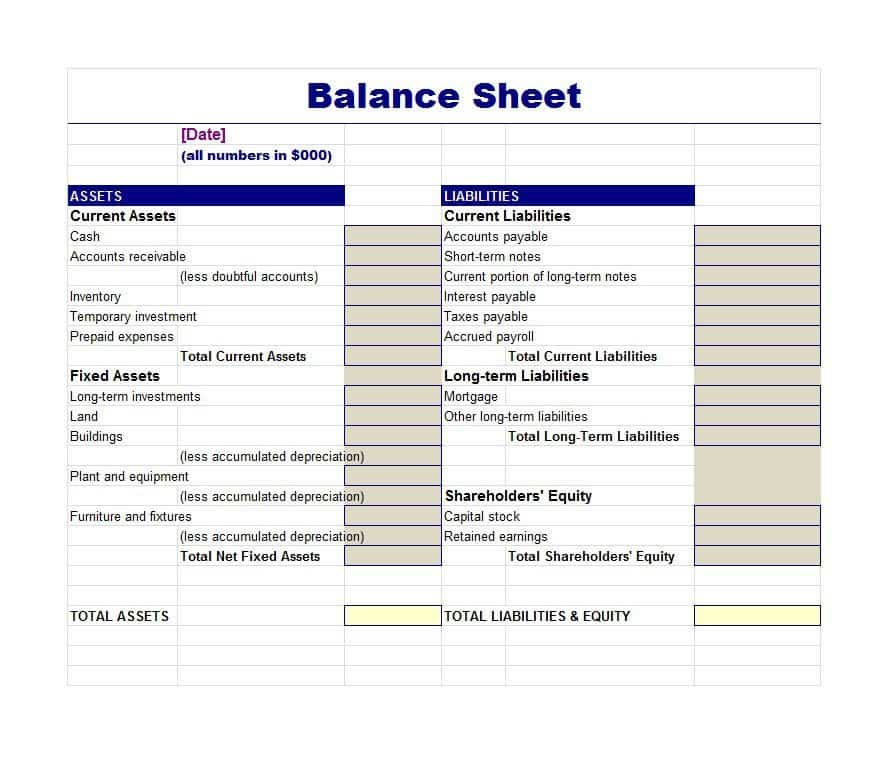
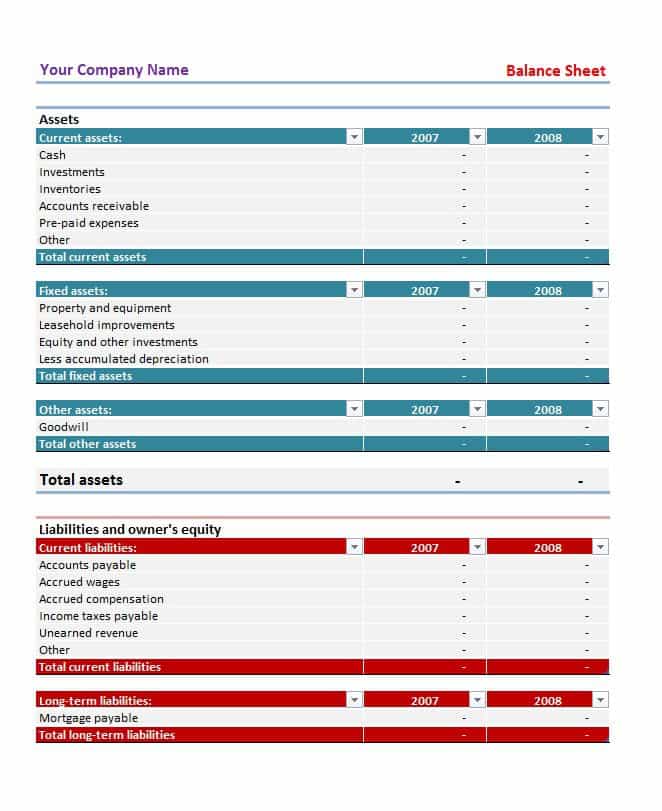
This balance sheet template provides a structured format for organizing a business’s assets, liabilities, and equity. It can help users arrange financial figures into clearly labeled sections and calculate the totals needed to review the company’s financial position.
The template can be customized with a company name, reporting date, account names, and financial figures. Excel is especially useful when formulas are included because totals can be calculated automatically and the statement can be updated when financial information changes.


FAQs
1. What is a balance sheet?
A balance sheet is a financial statement that shows a business’s assets, liabilities, and equity at a specific date.
2. What are the three main parts of a balance sheet?
The three main categories are assets, liabilities, and owner’s or shareholders’ equity.
3. What is the balance sheet equation?
The basic accounting equation is Assets = Liabilities + Equity.
4. Is Excel good for creating a balance sheet?
Yes. Excel is useful because formulas can calculate totals and make it easier to compare financial figures across reporting periods.
5. Can a small business use a balance sheet template?
Yes. A small business can use a balance sheet template to organize its assets, liabilities, and equity.
6. What are current assets?
Current assets are generally resources expected to be converted into cash or used within a relatively short period, such as cash, receivables, and inventory.
7. What are liabilities on a balance sheet?
Liabilities are financial obligations owed by a business, such as loans, accounts payable, accrued expenses, and taxes payable.
8. How often should a balance sheet be prepared?
Businesses may prepare balance sheets monthly, quarterly, annually, or at other intervals depending on their accounting and reporting needs.


You must be logged in to post a comment.